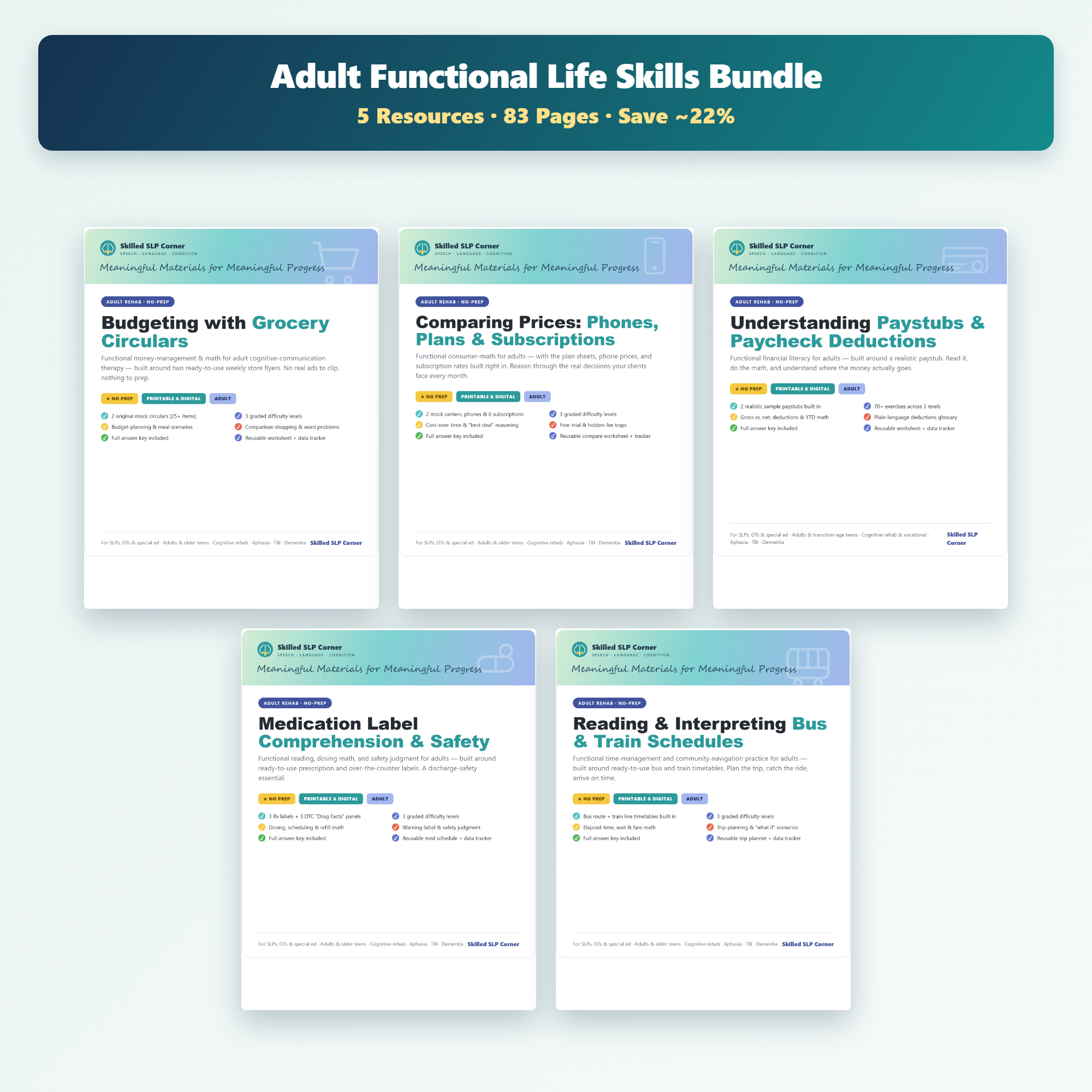
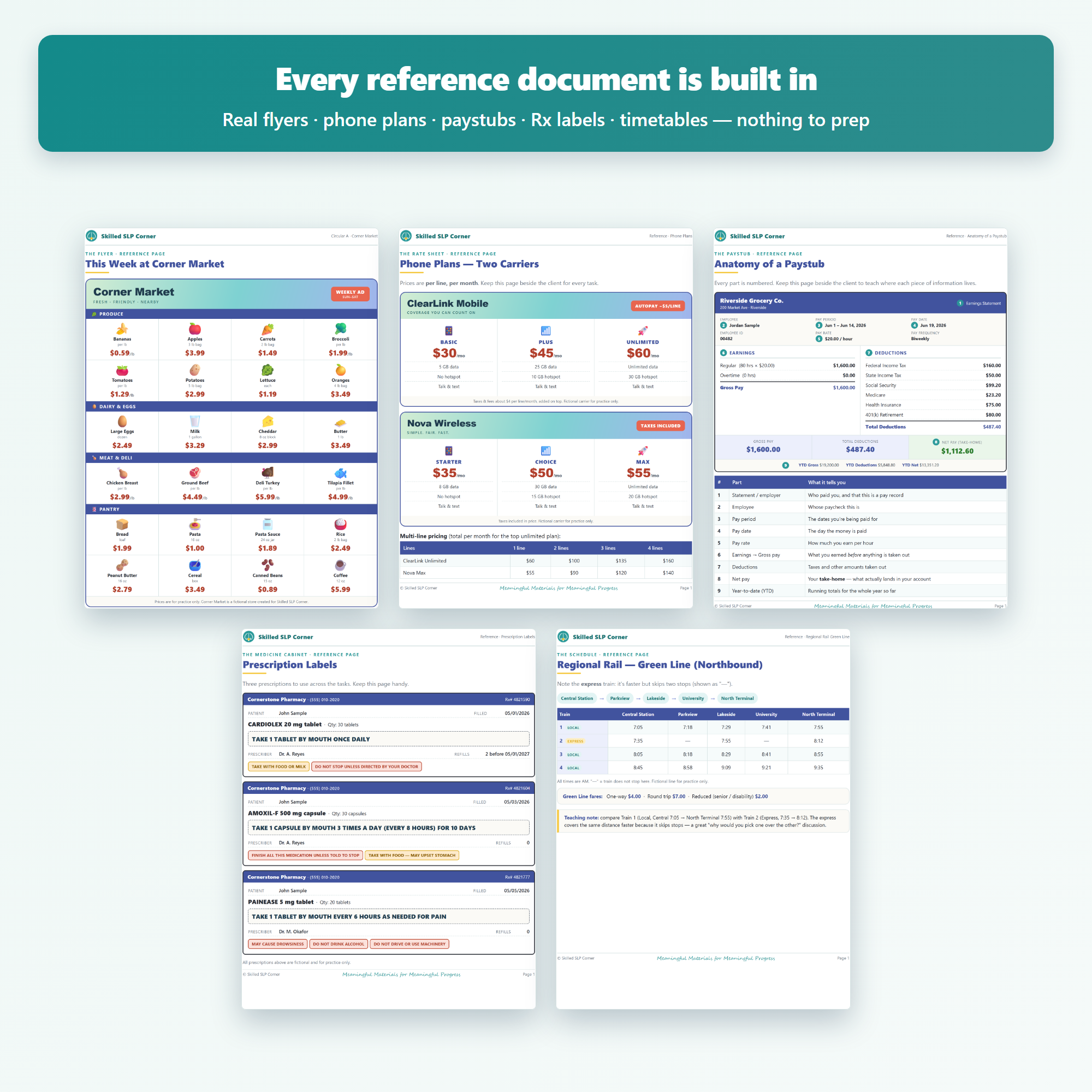
 Image 1 of 2
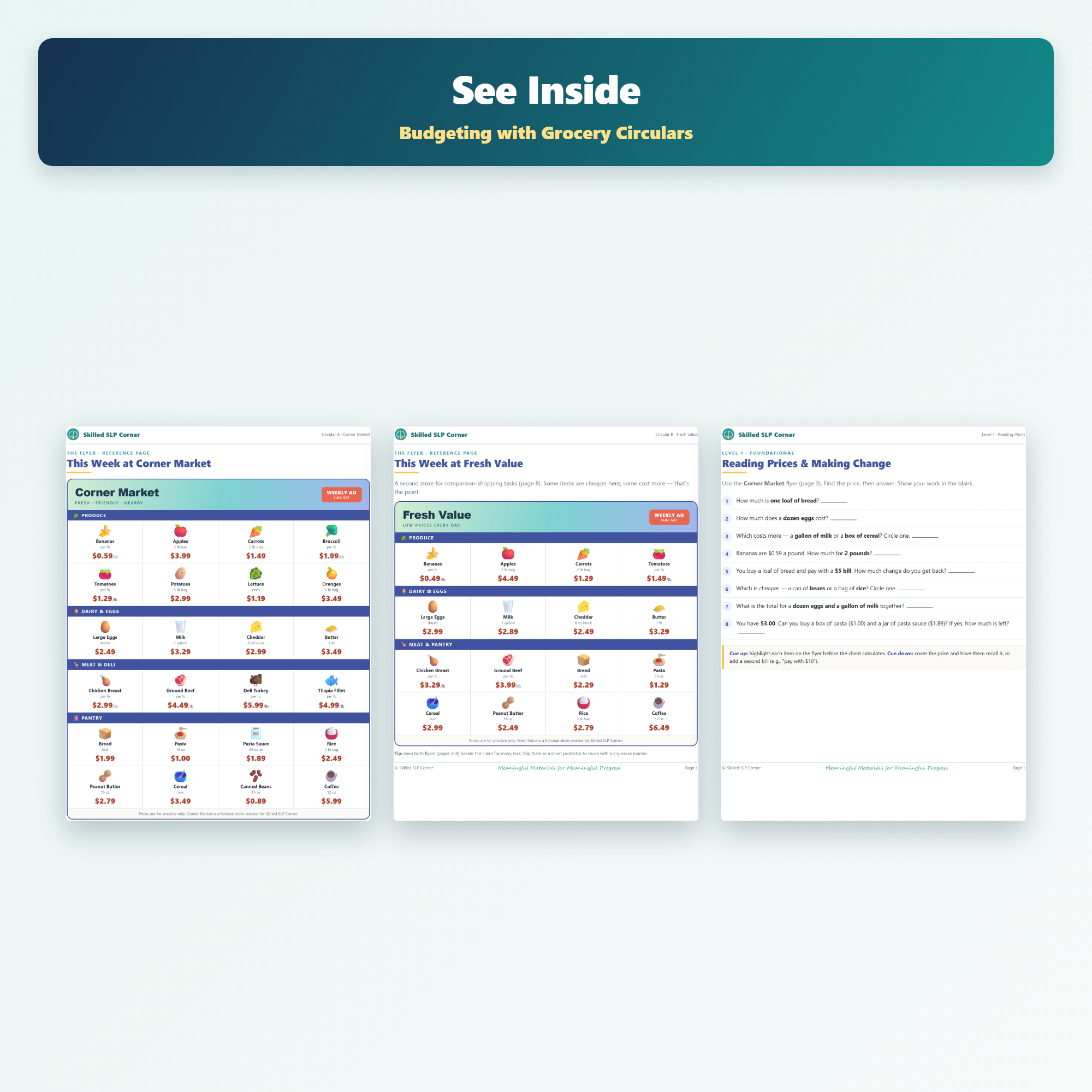 Image 2 of 2
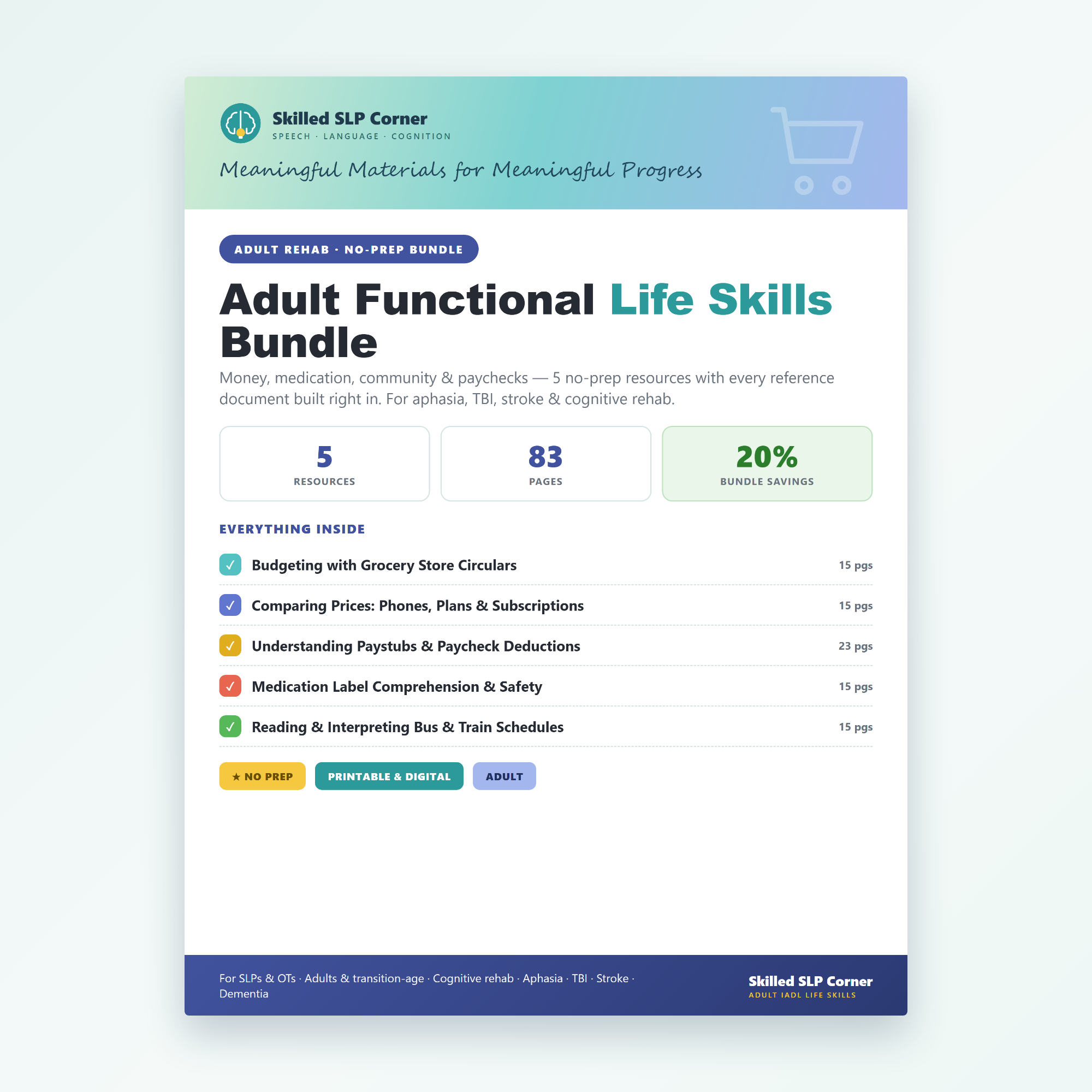
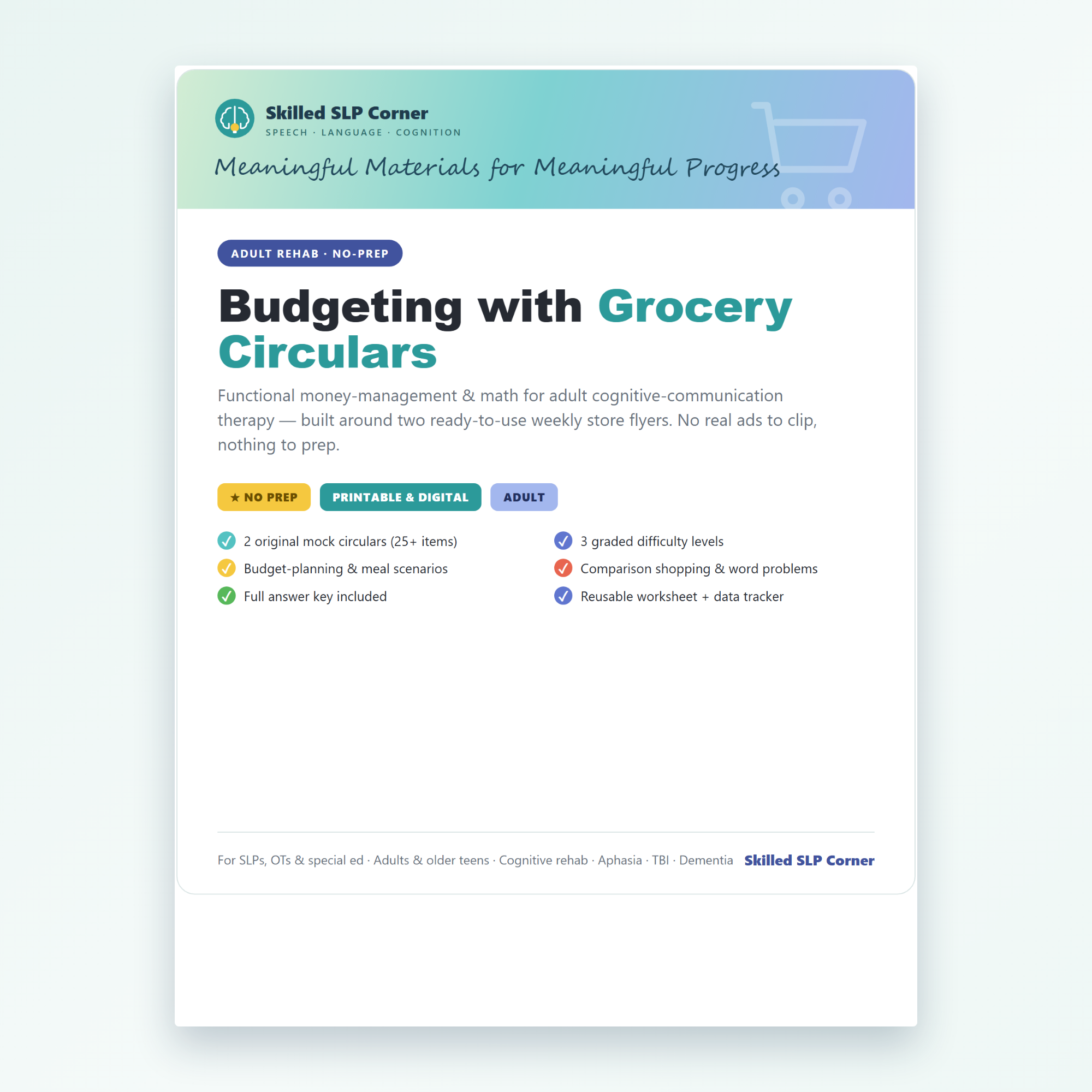
Bring real‑world money skills into therapy with this no‑prep, highly functional budgeting packet built around two original grocery store circulars—no clipping, no searching, no prep required. Perfect for adult cognitive‑communication therapy, this resource targets acalculia, executive function, reasoning, budgeting, and IADL readiness using tasks that feel meaningful, familiar, and immediately applicable to daily life.
Designed for SLPs, OTs, and special educators working with adults and older teens, this packet supports clients with aphasia, TBI, stroke, RHD, dementia, and mild–moderate cognitive impairment across SNF, outpatient, home health, and teletherapy settings.
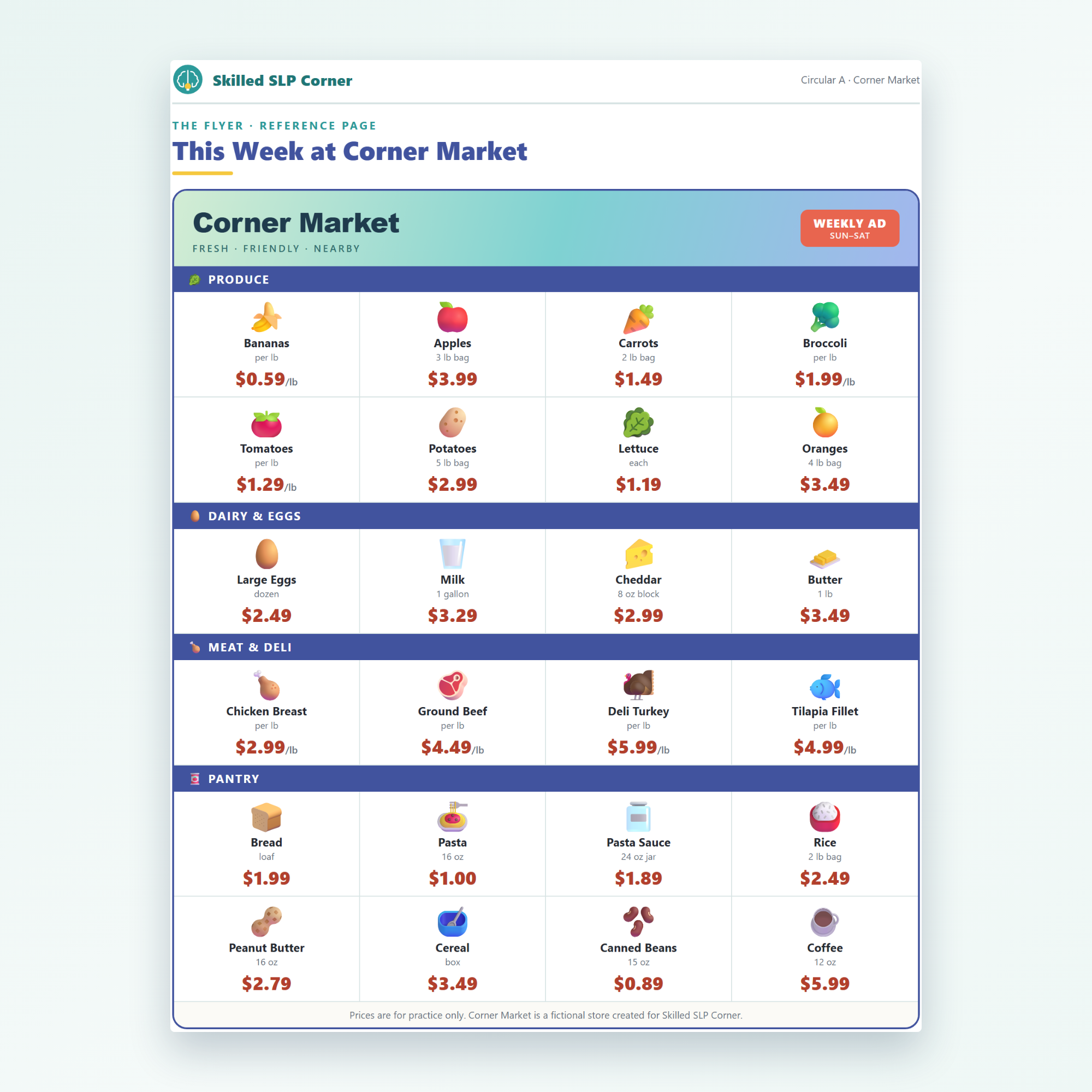
2 original mock grocery circulars (Corner Market & Fresh Value)
25+ items each
Copyright‑safe, reusable, and designed for therapy
3 graded difficulty levels
Level 1: Reading prices & making change
Level 2: Totaling lists & staying within a budget
Level 3: Applied reasoning & meal planning
Comparison‑shopping tasks using both flyers
Real‑world word problems (coupons, tax, unit price, estimation)
Reusable shopping & budget worksheet
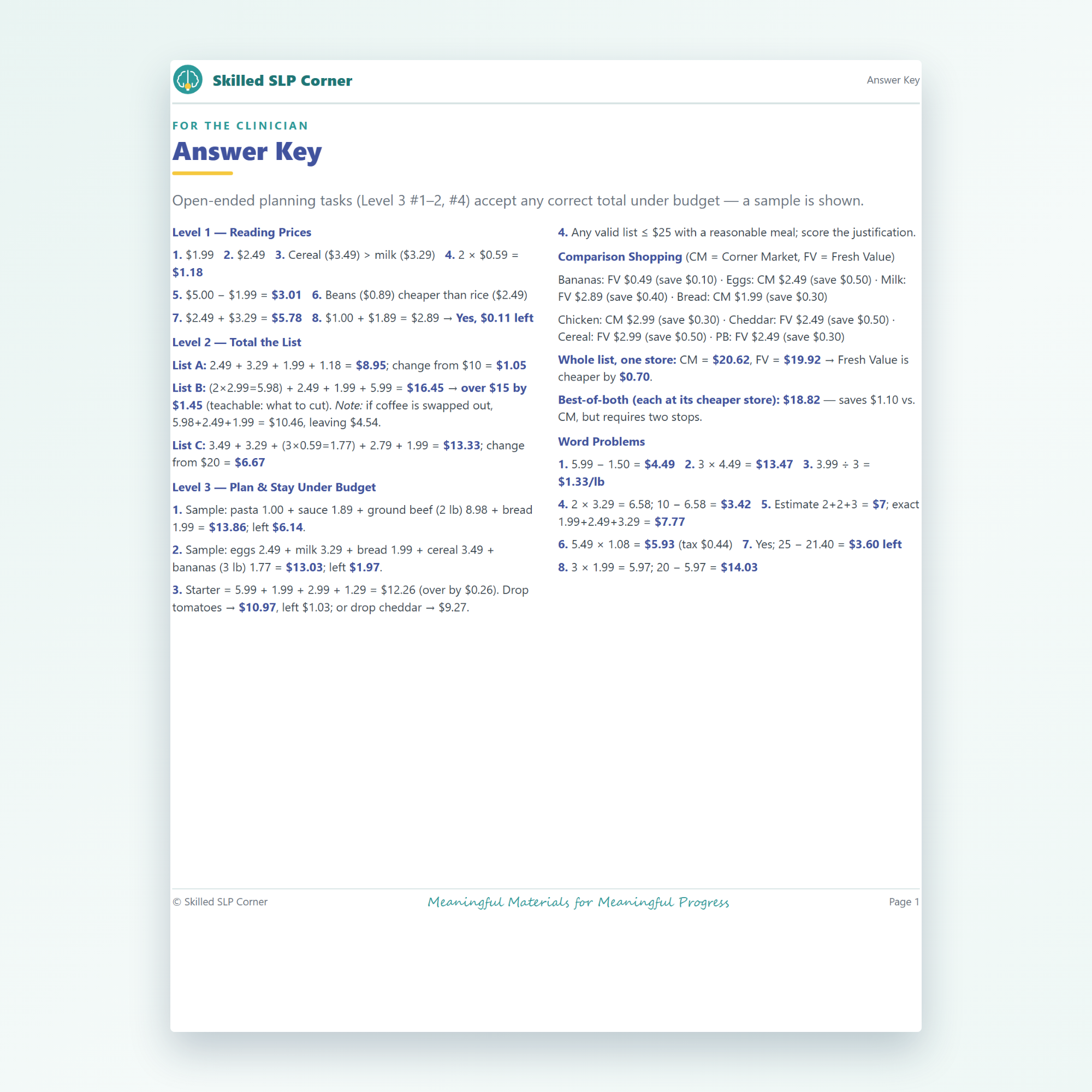
Full answer key
Data tracker for progress monitoring and documentation
This packet turns grocery shopping—a universal, functional IADL—into structured therapy that builds cognitive‑communication skills while preparing clients for real‑life independence. The flyers provide every price needed, so you can run dozens of tasks without ever needing a real ad.
The activities target:
Functional math & calculation
Problem‑solving & reasoning
Executive function (planning, budgeting, self‑monitoring)
Reading comprehension & visual scanning
Money management for discharge planning
As the guide notes, this resource supports acalculia, executive function, and IADL goals through tasks like “reading prices,” “totaling a list,” “budget planning,” and “comparison shopping,” all grounded in everyday grocery decisions.
Bring real‑world money skills into therapy with this no‑prep, highly functional budgeting packet built around two original grocery store circulars—no clipping, no searching, no prep required. Perfect for adult cognitive‑communication therapy, this resource targets acalculia, executive function, reasoning, budgeting, and IADL readiness using tasks that feel meaningful, familiar, and immediately applicable to daily life.
Designed for SLPs, OTs, and special educators working with adults and older teens, this packet supports clients with aphasia, TBI, stroke, RHD, dementia, and mild–moderate cognitive impairment across SNF, outpatient, home health, and teletherapy settings.
2 original mock grocery circulars (Corner Market & Fresh Value)
25+ items each
Copyright‑safe, reusable, and designed for therapy
3 graded difficulty levels
Level 1: Reading prices & making change
Level 2: Totaling lists & staying within a budget
Level 3: Applied reasoning & meal planning
Comparison‑shopping tasks using both flyers
Real‑world word problems (coupons, tax, unit price, estimation)
Reusable shopping & budget worksheet
Full answer key
Data tracker for progress monitoring and documentation
This packet turns grocery shopping—a universal, functional IADL—into structured therapy that builds cognitive‑communication skills while preparing clients for real‑life independence. The flyers provide every price needed, so you can run dozens of tasks without ever needing a real ad.
The activities target:
Functional math & calculation
Problem‑solving & reasoning
Executive function (planning, budgeting, self‑monitoring)
Reading comprehension & visual scanning
Money management for discharge planning
As the guide notes, this resource supports acalculia, executive function, and IADL goals through tasks like “reading prices,” “totaling a list,” “budget planning,” and “comparison shopping,” all grounded in everyday grocery decisions.